
Why Most Drone LiDAR Projects Fail Before the Drone Even Takes Off
You probably tie drone LiDAR project failure to trouble in the air. Yet most projects fail long before the propellers even spin. The real damage happens on paper, during planning. That is when your scope, accuracy, and ground control get decided. This pattern reaches far beyond surveying. The Project Management Institute studied why projects fall short. Nearly 47 percent miss their goals from weak planning, according to PMI. So it pays to know where these jobs go wrong. Then you can fix the problems while they stay cheap. Why do most drone LiDAR projects fail before takeoff? A flight only ever executes the plan you give it. So any weakness in that plan lands in your data. Rushed drone LiDAR project planning still produces a perfect flight. It just captures the wrong thing beautifully. And clean data hides that error very well. So nobody spots it until much later. Think of your project as a chain of decisions. Each link connects tightly to the next one. So one weak link early drags the whole result down. Seen this way, most drone LiDAR planning failures are not technical. They trace back to unclear goals, not faulty gear. That is the root of most drone LiDAR project failures. Fix the plan, and you fix the outcome. What planning mistakes cause the damage? A few mistakes show up again and again. The first is a fuzzy scope. You never pin down the deliverables or the accuracy. So the whole team is left guessing for weeks. Sensor choice trips up plenty of jobs too. A camera cannot see the ground beneath thick trees. So the wrong tool guarantees weak data from the start. Accuracy is the next weak spot to watch. You cannot plan ground control without a clear target. This is why LiDAR accuracy fails in real projects. And it happens long before anyone blames the sensor. Our guide on how accurate drone LiDAR is digs into the numbers. Coordinate systems cause plenty of grief too. The wrong datum or projection shifts your whole dataset. Sometimes it moves everything by whole metres. Nobody notices until the data reaches the design team. These are the classic Drone LiDAR Project Pitfalls. Each one is a decision, not an accident. And each can grow into full drone LiDAR project failure. So avoid these drone mapping mistakes by slowing down first. How do terrain and flight planning trip you up? Even solid paperwork cannot save a bad flight plan. A plan that ignores the real site fails fast. Fly too high over rough terrain, and detail disappears. You thin out points exactly where you need them. That gap alone can cause drone LiDAR project failure. Vegetation only makes the problem worse. A dense canopy swallows your laser pulses. So it leaves holes in the bare earth. Standing water and dust cause trouble too. Both scatter your pulses and add noise everywhere. Good drone LiDAR survey planning always accounts for trees. Our post on LiDAR in dense forest and mountain terrain shows why. Weather and airspace matter just as much. Wind, rain, and no fly zones can ruin a flight. None of them warn you on the day. So plan your Drone LiDAR Survey around these facts. Then you stand a real chance of success. What does a good pre-flight plan look like? The good news is that prevention is simple once you commit to it, because it starts with a proper pre-flight drone checklist that forces every important decision into the open before takeoff. When you confirm your deliverables, accuracy target, coordinate system, and ground control while your feet are still on the ground, you remove most of the risk before the battery is even charged. From there, you match the flight to the site, so your altitude, speed, and overlap suit both the terrain and the detail you need. You also decide how you will prove the results, because a survey without checkpoints is one you cannot defend. Above all, you work with people who treat planning as a job rather than a formality, since experience is what turns a checklist into a dependable result. That discipline is exactly what separates a smooth survey from a drone LiDAR project failure. And it is how Rekon Solutions approaches every job, planning around your terrain, your accuracy needs, and the decisions your data has to support. Frequently asked questions 1. What is the most common cause of drone LiDAR project failure? More often than not, it is weak planning rather than faulty equipment. Since unclear scope and missing ground control set the job up to miss its target from the start. 2. Do you always need ground control points for drone LiDAR? For accurate and verifiable results, you almost always need ground control points. Since it anchors your data to real coordinates and lets you prove the accuracy you promised. 3. How far ahead should you plan a drone LiDAR survey? As early as you can, because the sooner you lock down deliverables, accuracy, and site access, the more time you have to solve problems. 4. Can a bad flight plan be fixed after the flight? Sometimes reprocessing helps, yet if the data was never captured properly, or the ground control was skipped, you often have little choice but to fly the site again. How to set your project up to win When you step back, the lesson is encouraging, because if planning is where projects fail, it is also where you win them. You are never truly at the mercy of the technology, since the biggest levers sit in your hands before anyone launches a drone. So the next time you want to skip the setup and get straight to flying, remember that a calm hour spent on scope, accuracy, and ground control saves you weeks of rework. And that step is often the difference between a clean deliverable and an expensive drone LiDAR project failure. If you have a survey coming up and you want
The LiDAR Spec Sheet Doesn’t Tell You What You’re Actually Going to Get
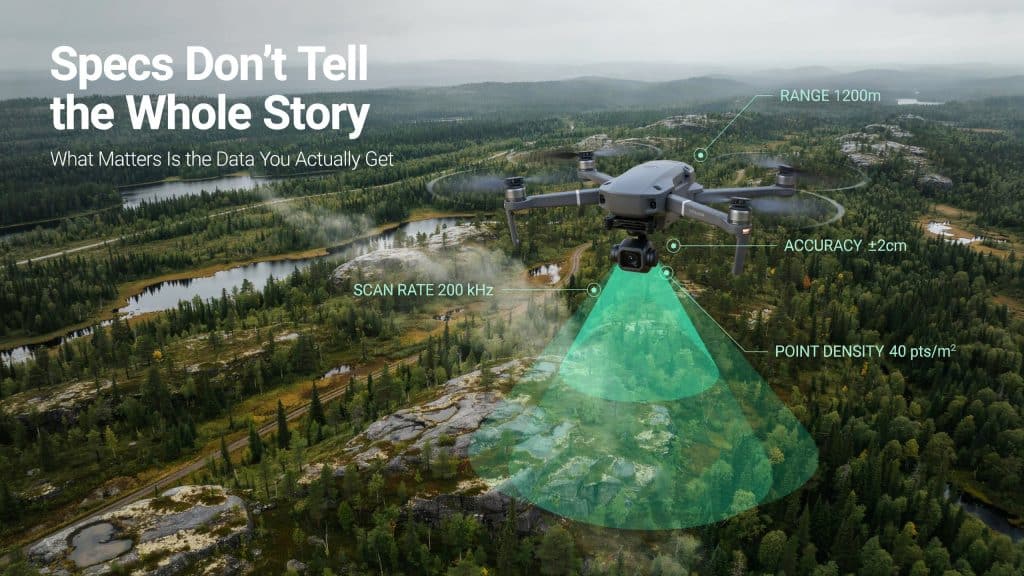
Have you ever chosen a sensor straight from its LiDAR spec sheet, picked the best numbers on paper, and still ended up with data that let you down? You are not alone. That sheet is where almost everyone starts, and it is also where a lot of people get quietly misled. Although those tidy figures for range, accuracy, and points per second look like promises. But, the truth is they are not accurate. In fact, they are best case results from a controlled lab, and your muddy, tree covered, real world site looks nothing like a lab. Here is the part nobody likes to say out loud. Independent testing by SPIE, the international optics and photonics society, found that lidars with similar advertised specifications often perform very differently in the field, according to SPIE. So before you trust the numbers, let us break down what a spec sheet really tells you, and what it leaves out. What is a LiDAR spec sheet actually telling you? Think of it as a resume. It lists the highlights, in the best possible light, under the best possible conditions. Most LiDAR specifications cover a handful of headline numbers. Range, accuracy, precision, points per second, and beam divergence are the usual suspects. These LiDAR specs are real and useful. The trouble is what LiDAR specs mean in practice, because every one of them was measured under ideal conditions the manufacturer picked. For example, a quoted range is usually tied to a specific target reflectivity, often as low as 10 percent, and a specific detection probability. And when you change the surface, the weather, or even the definition, that number will move a lot. That gap is why a LiDAR spec sheet is a starting point, not a guarantee. Why do lab specs fall short in the field? What’s important to keep in mind is that lab conditions are clean, but not your site. Out in the field, LiDAR performance depends on things the sheet never mentions. Vegetation, dust, rain, standing water, dark surfaces, and steep angles all steal returns and soften your data. This is exactly why two sensors with identical sheets can hand you very different results. Real LiDAR data quality is decided outside, on real ground, not inside a test chamber. We show how much conditions matter in our post on how LiDAR performs in dense forest and mountain terrain, where a canopy changes everything. None of that shows up on the sheet. What does the spec sheet leave out? Here is where results are actually won or lost. The sensor is only one ingredient. Ground control is huge. Without well measured control points, even a flawless scanner can drift, and no line on a page will save you. This is where real LiDAR accuracy is made. Flight planning matters just as much. Altitude, speed, overlap, and scan pattern shape your point density far more than the raw points per second figure ever suggests. Then there is processing. Classifying points, cleaning noise, and building surfaces is skilled work, and a weak workflow can waste a great sensor. In practice, a solid LiDAR survey and clean LiDAR scanning depend on the whole system, not one number. We dig into that in our guide on how accurate drone LiDAR is for engineering and construction projects. This is the part the LiDAR spec sheet simply cannot show you. How do you read and compare LiDAR specs the smart way? So how do you use a spec sheet without being fooled by it? Start by reading the fine print. When you learn how to read LiDAR specifications, always check the conditions attached to each number. Ask what reflectivity the range assumes and how the accuracy was measured. For how to compare LiDAR sensors fairly, line up the same conditions side by side. Comparing a range quoted at 10 percent reflectivity against one quoted at 80 percent is not a comparison at all. Then look past the LiDAR sensor specifications to the provider. The team flying, planning, and processing your job shapes the outcome more than any single number. A tidy LiDAR Specifications Sheet means little if nobody behind it knows your terrain. That is how you make a LiDAR spec sheet work for you instead of against you. Frequently asked questions 1. Can LiDAR see in the dark? Yes. LiDAR makes its own light with a laser, so it works fine at night. Darkness does not affect it, which is a real advantage over cameras. 2. What can LiDAR not detect? It struggles with clear glass, still water, and very dark or shiny surfaces, since the laser passes through or bounces away instead of returning. 3. Can you explain what LiDAR is and how it works? LiDAR fires rapid laser pulses and times how long each one takes to bounce back. Those timings become millions of 3D points that map the surface in detail. 4. What confuses LiDAR? Rain, dust, fog, reflective surfaces, and heavy vegetation all scatter or block the laser, which cuts returns and lowers accuracy. Always buy the results, not the numbers In the end, a spec sheet is a promise about a perfect day your project will never have. The numbers matter, but they are the floor, not the ceiling of what you get. What actually lands on your desk depends on ground control, planning, processing, and the people doing the work. That is the whole difference between a beautiful LiDAR spec sheet and beautiful data. If you want results you can trust, tell us about your site. Our team, at Rekon Solutions, will deliver LiDAR scanning services and LiDAR survey services tuned to your terrain, not to a lab. Discuss the project details now.
What Happens to Your Project When LiDAR Data Is Delivered Wrong
The scary thing about LiDAR data delivered wrong is that it does not look wrong. It arrives on time, opens cleanly, and shows a beautiful point cloud that nobody questions. So your team builds on it. Where designs get drawn, volumes get billed, and permits get filed, all resting on a foundation that quietly sits half a metre off. By the time anyone notices, the error is buried under months of work. That is why bad data is so expensive, and why it is worth understanding before it happens to you. How does bad LiDAR data slip through unnoticed? This is the part that catches people out. LiDAR data errors rarely announce themselves. A point cloud with a systematic vertical shift looks identical to a perfect one on screen. Everything is internally consistent, so the surface appears smooth, detailed, and completely believable. The same goes for misclassified points. If vegetation is wrongly labelled as ground, your bare earth model simply includes a few bumps that look like natural terrain. Without checks, nothing flags a problem. That is exactly how LiDAR data delivered wrong makes it into design packages, and why LiDAR quality control exists in the first place. What are the most common LiDAR data errors? Most problems trace back to a handful of causes, and the same LiDAR data mistakes repeat across projects. Poor or missing ground control is the classic one, since without measured control points the whole dataset can float away from real coordinates. Coordinate system mistakes are just as common. Mix up a datum, a projection, or a geoid model, and your data lands in the wrong place, sometimes by metres. Classification failures cause plenty of grief too. When LiDAR data processing mistakes leave vegetation or structures in the ground class, every contour and volume built from that surface inherits the error. Then there are the mechanical issues. Poor flight overlap leaves gaps, boresight calibration problems create doubled surfaces, and noise from water or dust adds LiDAR point cloud errors that skew your terrain. Any one of these can produce LiDAR data delivered wrong without a single obvious warning sign. What does inaccurate LiDAR data actually cost? Here is where it stops being technical and starts being financial. So what happens when LiDAR data is inaccurate? Every downstream decision inherits the mistake. Earthworks are the fastest way to feel it. A vertical error of just 20 centimetres across a large site can shift cut and fill volumes dramatically, which means you either move material you did not need to or run short halfway through. Design clashes follow. Drainage that will not flow, a road that does not tie in, and structures that do not sit where they should all trace back to the same faulty surface. The wider cost is well documented. A Construction Industry Institute study found rework on industrial projects averages more than 12 percent of total cost, with design changes, errors, and omissions driving most of it, according to CII. Bad LiDAR data quality feeds directly into that cycle. Worst of all is the trust cost. Once LiDAR data delivered wrong makes it into a project, teams start double checking everything, and the speed advantage you paid for disappears. How do you validate LiDAR data before you use it? The good news is that validation is not complicated. It just has to actually happen. Start with independent checkpoints. These are ground points measured separately from the ones used to build the model, and comparing them to the data shows the true error. On how to validate LiDAR data, the USGS and ASPRS standards require that your checkpoint survey be three times more accurate than the LiDAR itself. Next, check the numbers against recognised LiDAR accuracy standards. The USGS sets QL2 as its minimum, meaning at least 2 points per square metre and 10 centimetres vertical accuracy, so you have a clear benchmark for LiDAR data accuracy to measure against. Then review the practical stuff. Confirm the coordinate system and datum, look for gaps or voids, inspect the classification in a few sample areas, and compare overlapping flight lines for shifts. These few steps catch most cases of LiDAR data delivered wrong before they reach your design team. Finally, demand a validation report in writing. We break down what a complete delivery should include in our guide on how accurate drone LiDAR is for engineering and construction projects. How do you avoid getting bad data in the first place? Prevention beats detection every time. Avoiding LiDAR data delivered wrong starts with how you scope the job. Specify your accuracy requirement, your coordinate system, and your deliverables before anyone flies. Vague scopes are where incorrect LiDAR delivery usually begins. Ask how the provider handles ground control and what their QA process looks like. Terrain matters too, since dense canopy and steep ground demand more care, as we explain in our post on how LiDAR performs in dense forest and mountain terrain. Above all, work with people who treat verification as part of the job. Rekon Solutions plans every survey around documented checks, so you are never guessing whether the data holds up. Frequently asked questions 1. How do you know if LiDAR data is wrong? Compare it against independent checkpoints measured on the ground. Visual inspection alone will not reveal a systematic shift, since bad data usually looks perfectly normal. 2. What causes LiDAR point cloud errors? Common causes include missing ground control, wrong coordinate systems, calibration problems, poor overlap, and classification mistakes during processing. 3. Can bad LiDAR data be fixed after delivery? Sometimes. Reprocessing can correct classification and some alignment issues, but if ground control was never captured, a reflight is often the only real solution. 4. What accuracy should you expect from drone LiDAR? Well executed surveys commonly achieve 2 to 5 centimetre vertical accuracy, which comfortably exceeds the QL2 benchmark used for national elevation data. Why LiDAR Data verification is crucial Nobody sets out to build on faulty ground. Yet
Drone Inspections vs Manual Inspections: Which Is Safer?
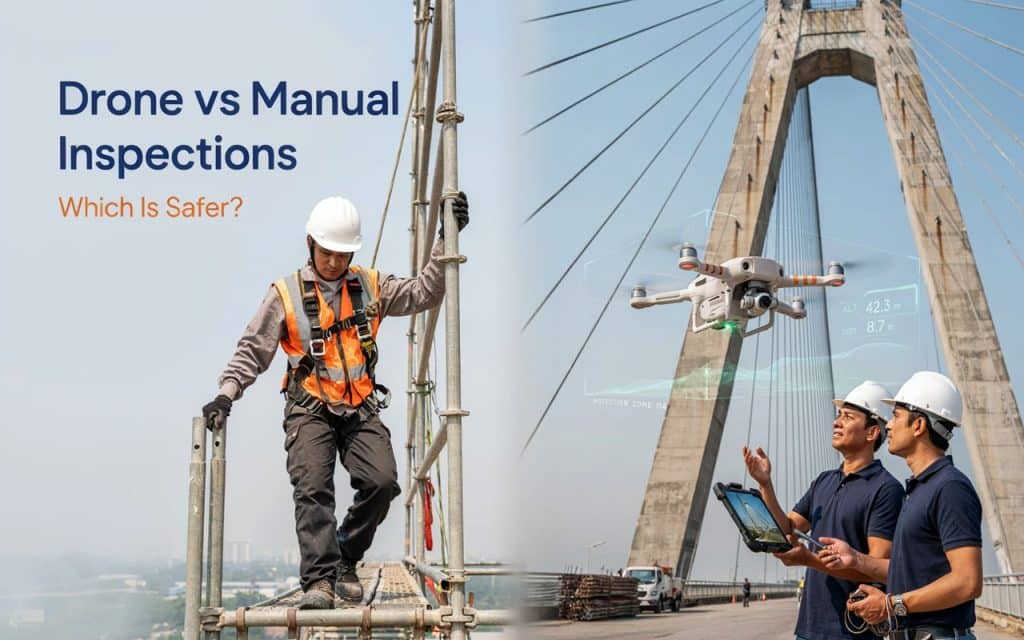
Ask anyone who has climbed a bridge pier in the rain and the drones vs manual inspections debate stops being theoretical. It becomes personal. For decades, getting eyes on an asset meant putting a body next to it. Someone climbed, someone rappelled, someone squeezed into a confined space with a flashlight. That worked, but it carried a cost that rarely showed up on the invoice. The risk sat with the person, not the equipment. Drones changed that math. So let us look honestly at which method is safer, why the gap is so wide, and where a human still needs to be on site. Why is manual inspection so risky? The danger is not the inspection itself. It is the access required to perform it. To reach a defect, a crew erects scaffolding, sets up rope access, or climbs a ladder onto a structure. Every one of those steps introduces a hazard that has nothing to do with the asset being checked. The numbers are hard to argue with. In 2024, falls to a lower level killed 389 construction workers out of 1,034 total construction fatalities, making them the leading cause of death in the industry, according to U.S. Bureau of Labor Statistics. Confined spaces add another layer. Tanks, tunnels, and vessels bring bad air, poor light, and difficult rescue. This is the real heart of the drones vs manual inspections question, because the traditional method asks a person to enter the risk zone before any data is collected. Are drone inspections safer than manual ones? Yes, and the reason is simple. The drone goes where the person used to go. An inspection technique drone can hover beside a beam, fly under a deck, or circle a tower while your crew stands on stable ground. Nobody climbs, and nobody hangs from a rope. That is real drone inspection risk reduction, not a marketing claim. Eliminating manual inspection hazards is not about managing a fall more carefully. It is about removing the fall hazard from the job entirely. Traffic is another quiet win. Bridge inspections often need lane closures, which puts workers next to moving vehicles. Aerial work shortens or removes that exposure, and this is why drone inspection vs traditional inspection rarely ends in a tie on safety. What are the safety risks of drones? Fairness matters here, so let us be clear. Drones are not risk free, and any honest look at drones vs manual inspections has to admit that. They simply move the risk. The main hazards are a flyaway, a battery failure, a collision with the structure, or a crash near people. The consequence is usually damaged equipment rather than a hospital visit, which is exactly the point. Good drone inspection safety comes down to discipline. That means trained pilots, a preflight check, a planned flight path, weather limits, and clear exclusion zones on the ground. The biggest problem with drones is not the aircraft at all. It is untrained operators flying without a plan, which is why the crew you hire matters as much as the hardware. When do you still need a person on site? Drones do not solve everything, and pretending otherwise helps nobody. Drones vs manual inspections is not a clean sweep, because some checks still need hands. If a defect must be touched, sounded, or physically tested, a person has to reach it. Material sampling, bolt torque checks, and hammer sounding are still manual jobs. Many teams now use a smart split. The drone screens the whole asset first, then people go only to the specific spots that need a closer look. That approach is the real answer to drones vs manual inspections. You shrink the time at height instead of eliminating skilled inspectors, and the data quality improves at the same time. Accuracy still depends on capture and processing, which we cover in our guide on how accurate drone LiDAR is for engineering and construction projects. How do you run a safe drone inspection? A safe flight is a planned flight. Before takeoff, you scope the asset, check the airspace, and review the weather. Then you set a ground exclusion zone, brief the crew, and run a preflight check on the aircraft and batteries. You keep the drone in sight and hold a safe distance from people. Terrain and structures affect the plan too, since tight or cluttered sites demand more care. We explain how these systems handle difficult environments in our post on how LiDAR performs in dense forest and mountain terrain. Experience is what ties it together. In drones vs manual inspections, the deciding factor is often the crew, not the kit. Rekon Solutions plans every inspection around your asset, your access constraints, and the safety of everyone on site. Frequently asked questions 1. What is the 1 to 1 rule for drones? It means your horizontal distance from uninvolved people should be at least equal to your flight altitude. Fly at 40 metres, stay 40 metres away, as EASA explains. It keeps people clear of the drop zone if the aircraft fails. 2. How do you make drone inspections safer? Use trained pilots, run preflight checks, plan the route, respect weather limits, and set exclusion zones. Most incidents trace back to skipped planning, not faulty hardware. 3. What is the difference between manual and automated inspection? Manual inspection relies on a person reaching and judging the asset directly. Automated inspection uses drones or software to capture and analyse data, keeping people out of the hazard zone. 4. How effective is manual inspection? It is effective where touch and physical testing matter, and skilled inspectors remain essential. However, it is slower, costlier, and far riskier when access is the hard part. Final Verdict: Which method should you choose? If safety is your measure, the comparison is not close. Drones vs manual inspections comes down to one question, and that is whether a person needs to be in the hazard zone to get the data. Most of the
Photogrammetry: when it works best (and when it doesn’t)
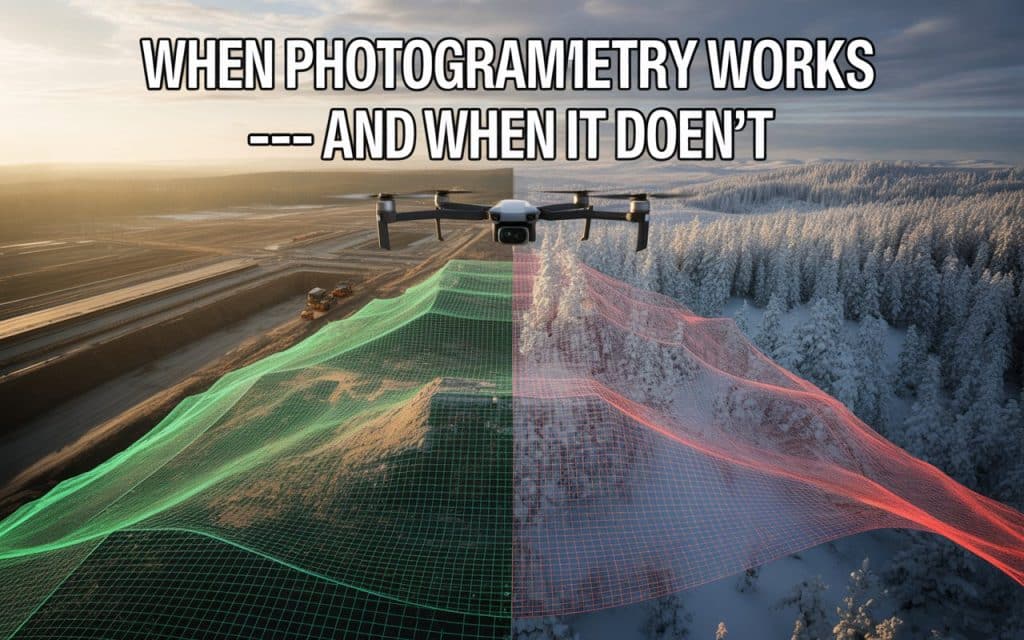
Choosing the wrong mapping method can quietly affect your entire project. Many teams adopt drone mapping because it looks fast and cost effective, but not every site is suitable for photogrammetry. Terrain, lighting, vegetation, and surface conditions all influence the final results. That is why understanding when to use drone photogrammetry matters before data collection even begins. Photogrammetry can deliver highly detailed mapping outputs under the right conditions. However, there are also situations where it struggles and creates avoidable accuracy issues. Smart project teams know that technology should match site conditions, not trends. Let’s look at where photogrammetry performs exceptionally well and where other methods may be the smarter choice. Why Drone Photogrammetry Performs So Well in Open Terrain One reason when to use drone photogrammetry has become such an important discussion is because of how effective it can be in the right environment. Photogrammetry works by stitching together overlapping aerial images into measurable spatial models. When terrain conditions cooperate, the results are impressive. Open landscapes with visible surface detail usually produce strong outputs. Construction sites, gravel pits, road corridors, and exposed terrain are ideal examples. These environments provide clear visual reference points that software can process accurately. This is where best conditions for drone photogrammetry become important. Consistent textures, stable lighting, and minimal obstruction help improve reconstruction quality significantly. How Terrain Conditions Influence Mapping Results Terrain directly affects how well photogrammetry performs. Flat or moderately varied surfaces usually process more reliably than heavily obstructed areas. This makes terrain suitability for photogrammetry one of the most important planning considerations. For example, rocky terrain with clear texture often creates excellent datasets. Snow covered surfaces, reflective materials, or dense forests create more processing difficulty. These environments reduce image consistency and weaken reconstruction accuracy. Additionally, steep elevation changes can sometimes create shadowing or visibility gaps. Flight planning helps reduce these issues, but terrain still plays a major role in final output quality. The Best Conditions for Drone Photogrammetry Several environmental factors help maximize photogrammetry performance. Understanding these conditions allows teams to improve mapping consistency and reduce processing errors. 1. Consistent Lighting Conditions Even lighting improves image clarity and overlap consistency. Harsh shadows or rapidly changing sunlight can affect reconstruction accuracy. 2. Strong Surface Texture Detailed surfaces help software identify matching points between images. Uniform surfaces like sand, water, or snow are more difficult to process. 3. Minimal Vegetation Obstruction Open terrain generally produces better results than dense forests. Thick vegetation can hide the ground surface from aerial imagery. 4. Stable Weather Conditions Wind can affect image sharpness and flight consistency. Calm weather improves data quality significantly. These are some of the drone survey accuracy factors experienced teams evaluate before planning a mission. When Photogrammetry Is Not Accurate Understanding when photogrammetry is not accurate is just as important as understanding its strengths. Many mapping problems happen because teams use photogrammetry in environments where it was never the ideal solution. Dense forests are one common challenge. Since photogrammetry depends on visible surfaces, thick canopy cover blocks the ground completely. This limits terrain accuracy beneath vegetation. Reflective or transparent surfaces also create problems. Water bodies, glass, or shiny metal structures often confuse image reconstruction software. These conditions increase the likelihood of drone mapping errors and limitations. Low texture environments create another issue. Uniform fields or featureless terrain provide fewer matching points for image alignment. Comparing LiDAR vs Photogrammetry Use Cases Many organizations now compare LiDAR vs photogrammetry use cases before selecting a mapping workflow. While both technologies create spatial data, they solve different problems more effectively. Photogrammetry excels in visually rich, open environments where detailed imagery matters. It is cost effective and produces strong visual outputs. LiDAR, however, performs better in forests, steep terrain, and heavily vegetated areas. This is why photogrammetry vs LiDAR comparison discussions should always focus on project conditions rather than popularity. One method is not universally better than the other. For example: Photogrammetry works well for construction progress tracking LiDAR performs better for terrain mapping beneath vegetation Photogrammetry captures stronger texture detail LiDAR delivers more reliable elevation data in difficult terrain Choosing the right tool depends entirely on project requirements. Learn more about how LiDAR performs in dense terrain. Understanding Drone Mapping Accuracy Limitations No mapping method is perfect in every situation. Understanding drone mapping accuracy limitations helps teams plan realistic expectations before data collection begins. Ground control placement, image overlap, flight altitude, and camera calibration all influence final accuracy. Even experienced operators must account for environmental variables carefully. Additionally, processing quality matters as much as image collection. Poor alignment settings or insufficient overlap can reduce reconstruction precision. This is why experienced survey teams focus heavily on workflow consistency. According to the American Society for Photogrammetry and Remote Sensing, aerial photogrammetry accuracy depends heavily on image quality, control accuracy, and environmental conditions. These factors directly affect how reliable the final outputs become. Photogrammetry Limitations Canada Teams Often Encounter Projects across Canada frequently involve forests, mountains, snow coverage, and changing weather. These conditions create unique photogrammetry limitations Canada teams must consider carefully. For example, snow covered terrain reduces visible texture and image contrast. Dense boreal forests limit ground visibility. Rapid weather changes also affect lighting consistency during flights. This does not mean photogrammetry is ineffective in Canada. It simply means project planning becomes more important. Teams often combine photogrammetry with LiDAR depending on terrain complexity. An experienced provider understands when one technology should support the other instead of forcing a single solution everywhere. Why Some Teams Combine Multiple 3D Mapping Methods Modern projects increasingly rely on hybrid workflows rather than single technologies. Combining aerial imagery with LiDAR often improves both visualization and elevation accuracy. This approach helps address 3D mapping methods differences more strategically. LiDAR captures terrain beneath vegetation, while photogrammetry provides detailed visual textures for topographic mapping. Together, they create more complete datasets. This combination is especially useful for infrastructure, mining, and environmental projects involving varied terrain conditions. If your team is evaluating drone mapping options, Rekon Solutions can help determine
Drone LiDAR Survey: The Questions Smart Teams Ask Before They Hire Anyone
Hiring the wrong survey provider can create delays, inaccurate data, and unexpected project costs. Many teams focus only on pricing and overlook the technical details that actually impact results. Unfortunately, this often leads to poor mapping quality and difficult project decisions later. That is why smart teams approach every drone LiDAR survey with the right questions first. They evaluate experience, workflows, accuracy standards, and data quality before selecting a provider. Moreover, they understand that the right survey partner directly affects project success. If you are planning engineering, construction, or infrastructure work, knowing what to ask can save both time and money. Let’s walk through the key questions experienced teams ask before hiring any LiDAR company. Why Choosing the Right Drone LiDAR Survey Provider Matters A drone LiDAR survey is more than just flying a drone over a site. The real value comes from planning, processing, and interpreting the data correctly. Without proper workflows, even advanced technology can produce unreliable results. This is why choosing a LiDAR survey provider becomes an important decision for your team. A qualified provider understands terrain challenges, data processing standards, and project requirements. They also know how to deliver actionable information instead of raw files. Additionally, poor survey data can impact engineering designs and construction planning. Choosing the right partner helps reduce risk and improve project confidence. What Experience Does the LiDAR Provider Have One of the first things smart teams evaluate is experience. Not every company offering drone services specializes in LiDAR workflows. Experience in aerial mapping alone does not guarantee expertise in LiDAR processing. Ask whether the provider has completed similar projects before. Their experience with terrain, infrastructure, or vegetation mapping matters significantly. This helps you assess their understanding of real-world project demands. You should also review their approach to LiDAR contractor requirements and quality assurance. Experienced teams follow structured workflows to maintain accuracy and consistency. Are Their Drone Surveying Qualifications Verified Technical capability matters, but qualifications matter equally. A professional drone LiDAR survey provider should meet all regulatory and operational standards. This includes licensing, safety compliance, and technical training. When reviewing drone surveying qualifications, ask about certifications and operational approvals. Qualified providers understand aviation regulations and safe flight practices. This protects both your project and your site operations. You should also confirm whether the team has experience processing LiDAR datasets. Data collection alone is not enough without proper interpretation and validation. What Accuracy Standards Do They Follow Accuracy is one of the most important factors in any survey project. Smart teams always ask how accuracy is measured and verified. Without clear standards, you may receive inconsistent or unreliable results. This is especially important when discussing LiDAR data accuracy standards Canada. Survey providers should explain how they validate elevation and positional accuracy. Ground control points and calibration methods are also important topics to discuss. According to Natural Resources Canada, LiDAR is widely used for high-resolution terrain mapping and infrastructure planning across Canada. These standards help ensure that survey data supports reliable engineering decisions. What Questions Should You Ask a Drone Mapping Company Many teams do not know where to start during provider evaluations. However, asking the right questions reveals whether a company truly understands your project needs. Here are a few important questions to ask drone mapping company representatives before hiring them: 1. How do you verify LiDAR accuracy This helps you understand their quality control process. Reliable providers should explain validation clearly. 2. What deliverables will we receive You should know whether outputs include terrain models, point clouds, or orthomosaics. 3. How do you handle difficult terrain This is important for projects involving forests, slopes, or remote locations. 4. What industries have you worked with Industry experience often reflects a provider’s ability to adapt to complex requirements. These questions help you evaluate technical expertise beyond marketing claims. Understanding the LiDAR vs Photogrammetry Decision Guide Some projects may benefit more from photogrammetry than LiDAR. Smart teams compare both methods before making a decision. This is where a proper LiDAR vs photogrammetry decision guide becomes useful. LiDAR performs exceptionally well in dense vegetation and complex terrain. It captures accurate elevation data even beneath tree cover. Photogrammetry, however, often provides stronger visual detail and lower operational costs. Choosing the right method depends on project goals. A reliable engineering survey provider should explain which technology best fits your needs instead of pushing a single solution. If you want to understand how LiDAR performs in dense terrain, you can read our blog here LiDAR in Dense Forrest and Mountain Terrain. Why a Drone Mapping Service Checklist Helps A structured evaluation process prevents costly mistakes during provider selection. This is why many organizations use a drone mapping service checklist before signing contracts. Your checklist should include experience, certifications, workflows, accuracy standards, and deliverables. It should also evaluate communication and project support. Strong providers explain technical details clearly and transparently. Additionally, timelines and reporting capabilities should be discussed early. Delays in survey delivery can impact project schedules significantly. Using a checklist keeps your evaluation process organized and objective. How Smart Teams Evaluate Long Term Value The lowest quote does not always provide the best outcome. Smart teams evaluate long-term value instead of focusing only on immediate costs. Reliable survey data prevents expensive redesigns and construction errors later. An experienced UAV survey company selection guide often emphasizes reliability over short-term savings. Teams that prioritize quality usually avoid delays and rework. You should also evaluate whether the provider supports ongoing collaboration. Survey needs often evolve during projects, and flexibility matters. If you are planning a mapping project and need expert guidance, Rekon Solutions can help you understand which approach best fits your requirements. Share your project details with us here. Why Communication Matters During Survey Projects Technical expertise alone is not enough for successful projects. Communication and responsiveness are equally important during a drone LiDAR survey. Your provider should explain workflows, deliverables, and limitations clearly. This ensures alignment between teams and reduces misunderstandings. Transparent communication also improves project planning. Strong communication
Why Pre-Construction Photography Protects You From Costly Disputes
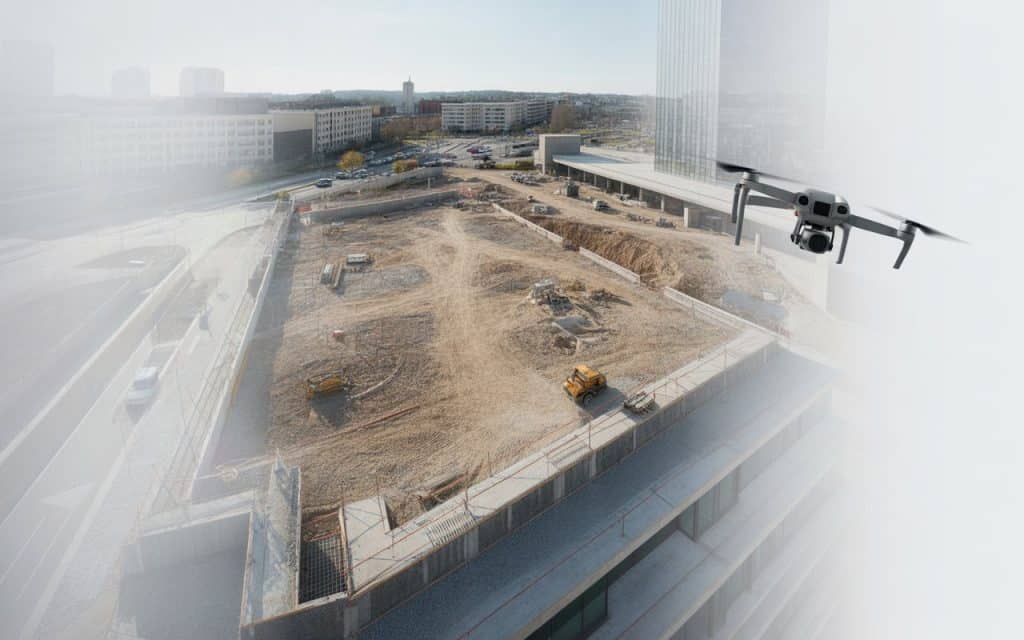
Imagine you’ve spent months, if not years, planning a construction project, only to have it delayed or face costly disputes later. These issues can arise over seemingly minor details like damaged property, environmental conditions, or disagreements about the quality of work. But what if you could protect yourself with clear, indisputable evidence from the very start? That’s exactly what pre-construction photography offers. By documenting the state of a construction site before work begins, you have a baseline record that can serve as crucial legal proof in the event of disputes. Whether you need construction site photography, drone construction photography, or aerial site documentation, it helps you avoid disputes and safeguard your interests. In this blog, we’ll explore why pre-construction site documentation is vital for any project and how it helps you avoid costly setbacks later on. What is Pre-Construction Photography? Pre-construction photography involves taking detailed photos of a construction site before any work begins. This documentation includes wide shots of the entire site, close-up images of specific features, and even detailed shots of existing structures. The goal is to capture the site’s current conditions, including any existing damage, environmental features, and surrounding infrastructure. By providing a clear, objective record of the site’s condition, pre-construction site documentation can be an invaluable asset if disputes arise. Whether you’re dealing with issues related to property damage, construction delays, or disagreements about the scope of work, having a detailed photographic record can make all the difference. This type of documentation is increasingly done using advanced technologies like drones. Drone construction photography offers high-resolution images and the ability to capture aerial views of the site, providing comprehensive site documentation that traditional photography cannot match. How Pre-Construction Photography Protects You One of the primary reasons to invest in construction progress photography is to establish a legal record of the site’s condition before any work begins. This documentation can protect you from false claims and help avoid disputes over damage caused during the construction process. When there’s no clear photographic record, it’s easy for parties to argue over when damage occurred or whether a pre-existing condition was the result of construction work. Pre-construction photos serve as a baseline for the site, so you can show exactly what the property looked like before work started. For example, if a neighboring property owner later claims that construction work on your site caused damage to their land, your site condition documentation can prove otherwise. This kind of legal proof of construction site conditions is an essential layer of protection for contractors, developers, and property owners. Aerial Site Documentation: The Power of Drones While traditional construction site photography can capture detailed ground-level images, aerial site documentation takes things a step further. Using drones for drone construction photography provides an elevated perspective that traditional methods simply can’t offer. Drones can capture wide-angle, high-resolution images that show the entire construction site, including hard-to-reach areas like rooftops or large land areas. This aerial view is particularly valuable for documenting large-scale projects, such as infrastructure construction or road building. Drones also provide the ability to quickly and easily update the photo documentation as the project progresses. By conducting routine aerial surveys, you can create a detailed visual timeline of the construction process, which can be crucial in proving the project’s progress and condition. According to Researchgate published study The Role of Drones in Surveying and Monitoring Construction Site, drone adoption in monitoring and surveying construction sites improves accuracy, safety and accuracy while reducing costs and timelines. By using drones for aerial site documentation, you gain a real-time, up-to-date photographic record that supports project documentation and progress tracking. How Pre-Construction Photography Helps Prevent Disputes Construction disputes are costly and time-consuming, but many of them are avoidable with proper documentation. Here are some common scenarios where pre-construction photography can help prevent costly disputes: 1. Existing Site Conditions Before any work begins, pre-construction photos document the state of the site. This helps address issues such as: Damage to neighboring properties Environmental factors like erosion or vegetation Pre-existing structural conditions in buildings or roads 2. Change Orders and Scope Creep Construction projects often experience changes in scope or unexpected work. Having a clear photographic record of the site conditions before work starts helps with clarity. You can easily identify what was originally agreed upon and what changes occurred during the project. This reduces the chances of disagreements over contract terms or additional work. 3. Property Damage Claims Property damage claims are one of the most common sources of construction disputes. Pre-construction photos help establish a baseline of site conditions. They make it easier to determine whether damage was caused by construction activities or if it existed beforehand. 4. Environmental and Regulatory Compliance Construction projects must comply with local environmental regulations. If the project inadvertently causes damage to local ecosystems or violates zoning laws, pre-construction photos can serve as evidence of compliance. That too, with environmental standards before work began. The Role of Site Documentation Services A site documentation service helps organize and store construction progress photography, baseline site photos, and other essential records. These services ensure that you always have accurate and accessible documentation in case of disputes or audits. Many site documentation services also include digital archiving, so you can easily retrieve and share images whenever needed. This is especially useful for large projects with multiple stakeholders who need to access the documentation. In Canada, companies offering site documentation services play a crucial role in helping construction firms maintain transparency and protect themselves from disputes. Companies with organized documentation systems are more likely to have a smooth claims process if issues arise. For more information on how to keep track of your construction project, check out our blog on the role of drones in industrial inspections for improved accuracy and safety. FAQs: Pre-Construction Photography How is pre-construction photography used in construction? Pre-construction photography captures detailed images of the site before any work begins. This helps document the condition of the property and serves as a record in
What Can Drone Inspections Detect That Ground Crews Miss
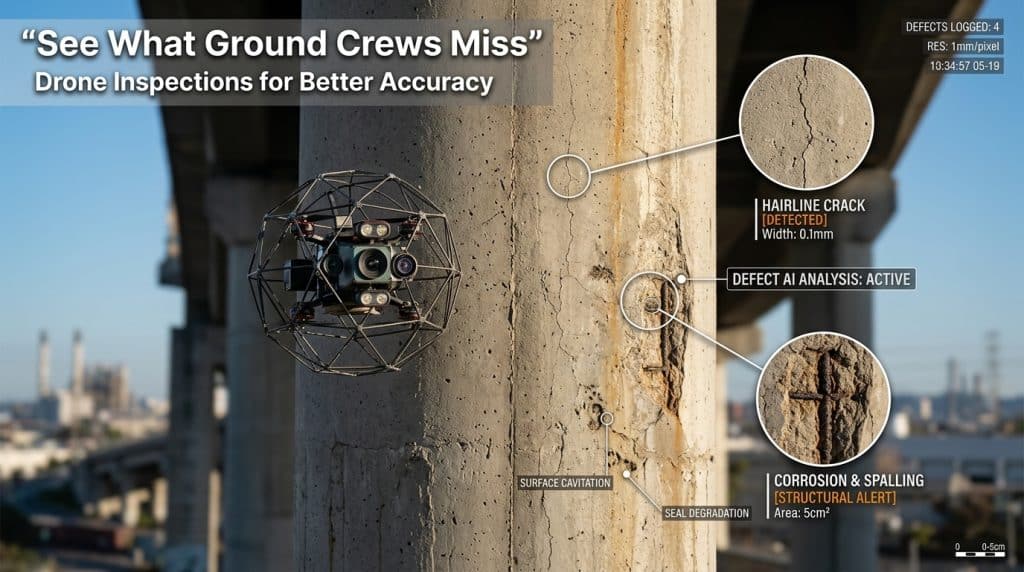
Inspections are critical for keeping assets safe, reliable, and compliant. However, many issues go unnoticed when inspections rely only on ground access. Limited visibility, safety risks, and time constraints often reduce how much you can actually inspect. This is where drone inspection services give you a clear advantage. Instead of working around access limitations, drones bring the inspection directly to the problem areas. They allow you to capture detailed visuals that are simply not visible from the ground. If you want fewer surprises and better control over asset conditions, understanding this difference matters. Let’s look at what drones can truly uncover that ground crews often miss. Why Drone Inspection Services Capture What Ground Inspections Cannot Drone inspection services change how you view assets by removing physical limitations. Ground crews rely on angles that are often obstructed by structures, terrain, or elevation. Drones eliminate that barrier by approaching assets from above, below, and the sides. This flexibility makes hard-to-reach area inspection much more effective. Areas like undersides of bridges, tall facades, or confined structures become fully visible. Instead of partial visibility, you get complete inspection coverage. Additionally, drones provide consistent data capture. Each inspection follows planned flight paths, which improves repeatability and comparison over time. Subtle Defects That Are Easily Missed on the Ground Even experienced inspectors can miss early-stage defects when visibility is limited. Drone inspections help identify these small issues before they develop into major failures. Fine Cracks and Surface Irregularities Hairline cracks often appear in places that are difficult to see from ground level. With visual inspection by drone, these details become clear through close-range imaging. Early detection allows you to act before structural integrity is affected. Early Corrosion and Material Wear Corrosion typically starts in joints, edges, or shaded areas. These are not always visible during manual inspections. Defect detection with drones helps identify these early signs, especially in elevated or enclosed sections. Displacements and Alignment Issues Small shifts in components may not be obvious from a distance. However, drones capture precise visuals that reveal these changes. This improves infrastructure defect detection and prevents escalation. Inspection Accuracy Drones Bring to Modern Workflows Accuracy improves significantly when inspections rely on detailed aerial data. Drone inspection services reduce dependence on assumptions and limited viewpoints. Instead, they provide clear, measurable visual evidence. High resolution imagery allows you to zoom in and analyze specific areas. This improves inspection accuracy drones deliver across projects. You can also revisit the data anytime without returning to the site. According to PwC Polska studies, drones can improve inspection efficiency by up to 50% while enhancing data reliability. These insights show how drones are not just faster, but also more dependable. Inspecting Areas That Were Previously Inaccessible Certain areas are either too dangerous or too expensive to inspect using traditional methods. These include high elevations, confined spaces, and unstable structures. Ground crews often require scaffolding or specialized equipment to access them. With hard-to-reach area inspection, drones remove those barriers completely. They can enter tight spaces or hover near complex structures without putting workers at risk. This improves both safety and inspection coverage. For example, inspecting the underside of a bridge manually can be time-consuming and risky. Drones complete the same task quickly while capturing better visuals. If you want to understand how aerial inspections improve project safety, you can read our blog: How Drone Inspections Improve Safety and Accuracy Real World Scenarios Where Drones Make the Difference You will see the value of drone inspection services most clearly in complex environments. In construction, drones help identify structural inconsistencies early. This reduces costly rework and delays. Infrastructure projects also benefit from improved visibility. Drones inspect towers, pipelines, and bridges without interrupting operations. This ensures continuous monitoring without downtime. In industrial environments, drone inspections reduce the need for shutdowns. Facilities can continue operating while inspections are completed safely and efficiently. If you are planning inspections and want better visibility into your assets, you can contact Rekon Solutions to discuss how drones can support your workflow. Why Visual Inspection by Drone Improves Decision Making Visual clarity plays a major role in inspection outcomes. Visual inspection by drone provides detailed imagery that supports better communication and analysis. Teams can review findings without relying on verbal descriptions alone. You also gain a visual record of asset conditions over time. This helps track deterioration and plan maintenance proactively. Instead of reacting to failures, you can prevent them. Additionally, drone data integrates well with mapping and modeling tools. This creates a more complete understanding of your assets. The Role of Drone Inspect Pros in Delivering Results Technology alone is not enough to guarantee quality results. Drone inspect pros bring expertise in flight planning, data capture, and analysis. They ensure that inspections focus on critical areas. They also understand how to interpret the data correctly. This turns raw visuals into actionable insights. Working with professionals helps you maximize the value of drone inspection services. Enhancing Inspections with Integrated Technologies Modern inspections often combine drones with other technologies. For example, aerial data can be paired with LiDAR or photogrammetry outputs. This improves both accuracy and depth of analysis. By integrating these methods, you strengthen infrastructure defect detection capabilities. You also gain a more complete picture of asset conditions. You can explore more about drone thermography for industrial inspection. FAQs What do drone inspections detect that manual inspections miss Drones detect small cracks, corrosion, and hidden defects in hard-to-see areas. They provide complete visual coverage. How do drones improve inspection accuracy They capture high resolution data from multiple angles. This reduces blind spots and improves consistency. Are drone inspections suitable for complex structures Yes, drones are ideal for inspecting bridges, towers, and industrial facilities. They access areas that are difficult to reach manually. Do drone inspections reduce inspection risks Yes, they limit the need for workers to enter hazardous environments. This significantly improves safety. Moving Forward with Better Inspection Insights Inspections should give you confidence, not uncertainty. Drone inspection services help you detect issues
LiDAR vs. Traditional Methods: The Power of Precision in Mapping
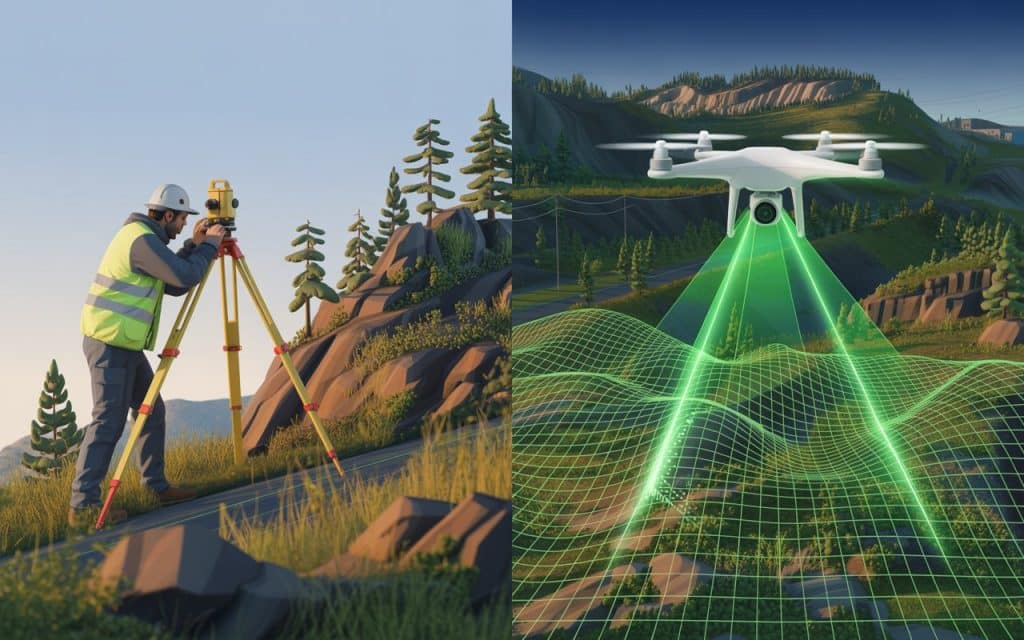
When it comes to mapping and surveying, precision is paramount. Traditional methods have been relied upon for centuries, but times are changing. LiDAR technology has emerged as a game-changer, offering high-accuracy results faster and more efficiently than ever before. In fact, recent 2024 research proves and supports LiDAR’s efficiency and accuracy in complex and vegetated terrains. While conventional land surveying still holds value, LiDAR is quickly becoming the preferred method. Thus, understanding the key differences between LiDAR and traditional methods helps you make informed decisions for your projects. Let’s dive into how LiDAR survey accuracy can transform your mapping and surveying efforts. LiDAR vs Traditional Methods: Key Differences LiDAR (Light Detection and Ranging) uses laser pulses to capture highly accurate measurements of the Earth’s surface. In contrast, traditional methods rely on physical measurement tools such as tape measures, levels, and theodolites. Here’s how the two compare: Traditional Surveying: Manual Measurement: Requires more physical presence and effort from surveyors. Slower Process: Measurements are taken step-by-step, making the process time-consuming. Human Error: Dependent on surveyor skill, which can lead to inaccuracies. LiDAR Surveying: Remote Data Capture: Uses laser sensors, which can quickly map vast areas without physically being there. Faster Data Collection: LiDAR scans large surfaces in a fraction of the time compared to manual methods. Higher Accuracy: Laser technology ensures a high-precision output, minimizing the risk of human error. Benefits of LiDAR Over Conventional Land Surveying LiDAR is revolutionizing the surveying industry by offering clear advantages over traditional methods. Let’s break down the key benefits of LiDAR survey accuracy: Speed and Efficiency LiDAR captures data much faster than traditional methods. A large area can be scanned in a short period, reducing fieldwork time and increasing productivity. Accuracy LiDAR’s precision is unmatched, capturing millimeter-level measurements. Traditional methods, while accurate, are prone to small errors due to manual measurements. Safety LiDAR allows surveyors to map hazardous or hard-to-reach areas without putting themselves at risk. This makes it ideal for environments such as cliffs, mines, and remote locations. How LiDAR Improves Mapping Technology Evolution As the need for faster and more reliable data grows, LiDAR’s role in mapping technology evolution cannot be overstated. Traditional surveying is often limited by time constraints, accuracy issues, and the need for manual labor. LiDAR, on the other hand, is enhancing the capabilities of modern surveying in several ways: 3D Mapping LiDAR creates detailed 3D models that show elevation changes and surface characteristics. Whereas, traditional methods are typically limited to 2D data or require complex processes to generate 3D data. High-Precision Mapping LiDAR’s high precision captures surface details with extreme accuracy, even for complex terrain. High-precision mapping becomes possible, leading to more reliable decision-making for urban planning, construction, and other industries. Real-Time Data LiDAR’s ability to process data quickly provides near-real-time results, allowing faster project planning and execution. In comparison, traditional methods are more time-intensive, often leading to delays in projects. LiDAR vs Traditional Methods: Which One is Right for Your Project? While LiDAR offers clear advantages in terms of speed, precision, and safety, traditional methods still have their place. It’s important to understand when LiDAR is the best choice, and when conventional surveying might still be applicable. When to Use LiDAR: For large-scale surveying projects requiring high precision. For difficult-to-access or dangerous terrain. For projects requiring 3D models, such as flood modeling or forest management. When to Use Traditional Surveying: For smaller, simpler projects where speed and precision are not as critical. When budget constraints prevent the use of LiDAR technology. For projects where historical methods are well-suited and adequate for the task. The Future of Surveying: LiDAR and Modern Surveying Methods Looking ahead, modern surveying methods will increasingly rely on LiDAR technology. As the technology evolves and becomes more accessible, the applications for LiDAR will expand. LiDAR not only makes surveying faster and more accurate, but it also opens doors to previously impossible projects. The integration of LiDAR with UAVs (drones) is particularly exciting, as it allows surveyors to capture data from hard-to-reach areas without the need for scaffolding or helicopters. This is a game-changer in industries like construction, mining, and environmental monitoring. Learn more: LiDAR in British Columbia: Use Cases, Accuracy & Regulatory Considerations Advantages of High-Precision Mapping with LiDAR When high-precision mapping is required, LiDAR is the clear winner. The level of detail LiDAR provides cannot be matched by traditional surveying methods. Here are some of the advantages of LiDAR for high-precision mapping: Accurate to the millimeter: Provides measurements with high vertical and horizontal accuracy. Faster data collection: Allows for faster project execution, which leads to cost savings. Versatile: LiDAR can be used in a variety of industries for different types of mapping needs. Frequently Asked Questions (FAQs) What’s more accurate, LiDAR or photogrammetry? LiDAR is generally more accurate than photogrammetry, especially for capturing elevation data. While photogrammetry excels in visual modeling, LiDAR provides precise, reliable measurements for terrain. What’s better than LiDAR? Nothing is definitively better than LiDAR for terrain mapping, but a combination of LiDAR and photogrammetry can provide both high precision and visual detail. Each technology complements the other, depending on the project needs. Is photogrammetry cheaper than LiDAR? Yes, photogrammetry is generally cheaper than LiDAR, especially for small-scale projects. However, for large and complex projects, LiDAR’s precision and efficiency may justify the higher cost. Is photogrammetry reliable? Photogrammetry is reliable when environmental conditions are ideal. However, it can struggle with accuracy in poor lighting or difficult terrain. LiDAR tends to be more consistent across all conditions. Moving Forward with Confidence Understanding the strengths and limitations of both LiDAR and traditional surveying methods helps you make the best choice for your project. LiDAR’s precision, speed, and ability to map complex terrain make it an invaluable tool for modern surveying. If you are ready to adopt cutting-edge surveying technology, get a quote here or contact our team to learn more about how LiDAR can transform your projects.
Photogrammetry vs LiDAR: Which One Wins
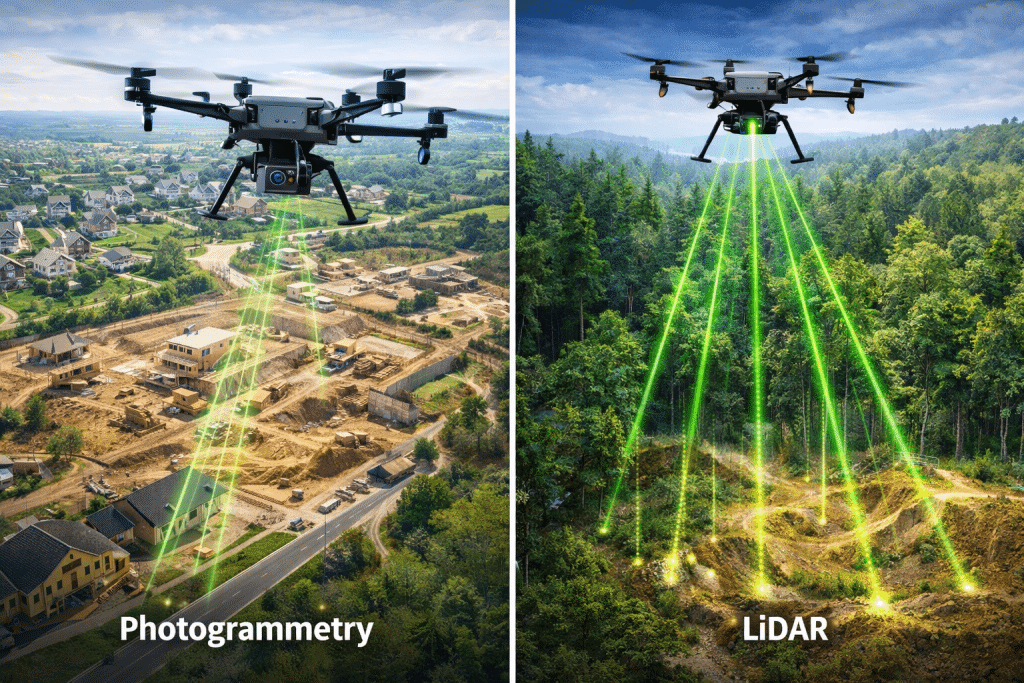
Choosing the right mapping technology can shape the success of your project. Whether you are working in forestry infrastructure construction or mining, the photogrammetry vs lidar debate comes up again and again. Both methods deliver powerful spatial data, but they work very differently and serve different needs. We believe that understanding how each technology performs in real conditions will help you best to make an informed decision. What is Photogrammetry? Photogrammetry is a mapping method that creates 3D models using overlapping images. These images are typically captured by drones or aircraft and processed through software to reconstruct surfaces and structures. This approach works best when there is clear visibility of the ground or objects being mapped. As it relies heavily on light texture and surface detail to calculate depth and shape. Photogrammetry is widely used in construction planning site monitoring and visual inspections. Because it produces highly detailed visuals that are easy to interpret and share with stakeholders. However, its accuracy depends on lighting conditions, surface contrast and line of sight. As the dense vegetation shadows or uniform surfaces can greatly reduce reliability. Learn about Aerial Photography. What is LiDAR? LiDAR uses laser pulses to measure distances between the sensor and the ground. A LiDAR system sends thousands of laser points per second and records how long it takes for each pulse to return. This technology excels in complex environments. It can penetrate vegetation gaps and capture elevation data beneath forest canopies. That capability makes it especially valuable in forestry infrastructure corridors and terrain analysis. Drone based LiDAR systems are commonly used across Canada where large forested areas, uneven terrain and remote access are common challenges. LiDAR data is less dependent on lighting conditions and delivers consistent results even in low contrast environments. Key differences in data capture The core difference in photogrammetry vs lidar lies in how data is collected. Photogrammetry depends on visible light and surface features. If the camera cannot see the ground clearly the data quality drops. LiDAR directly measures distance using laser pulses. Even when the ground is partially hidden by vegetation the system can still collect elevation points. This difference becomes critical in mapping technology comparison scenarios involving forests, powerline corridors, highways and floodplain studies. Accuracy in real world projects When discussing lidar vs photogrammetry accuracy context matters. Photogrammetry can achieve high accuracy on open sites such as construction zones, stockpiles and building exteriors. With proper ground control it performs well for volume calculations and surface modeling. LiDAR delivers superior vertical accuracy in complex terrain. It is particularly effective for slope analysis, drainage planning and infrastructure design in uneven or vegetated areas. In Canadian forestry projects LiDAR is often preferred because it provides reliable elevation models without requiring land clearing or seasonal leaf off conditions. Learn more about the growing demand of LiDAR services. Performance in forestry applications Forestry is where drone lidar vs photogrammetry differences are most visible. Photogrammetry struggles in dense forests because tree canopies block visibility of the ground. This limits its usefulness for terrain modeling and forest inventory analysis. LiDAR can capture multiple returns from a single laser pulse. Some pulses reach the forest floor while others reflect off branches and leaves. This allows accurate ground models, tree height measurements and biomass estimates. For forest management, environmental assessment and infrastructure routing through wooded regions LiDAR consistently delivers more actionable data. Infrastructure and construction use cases In infrastructure and construction both technologies play valuable roles. Photogrammetry is excellent for visual documentation, progress tracking and communication. Construction teams often use it to generate orthomosaics and realistic 3D site models. LiDAR is preferred when precision matters more than visuals. Road design, rail corridors, bridge planning and flood risk analysis benefit from LiDAR accuracy and consistency. Survey technology differences become especially important when working near slopes, waterways or existing utilities where elevation errors can cause costly issues. Cost considerations and project scale Cost is often part of the decision. Photogrammetry systems are generally less expensive to deploy. Data processing is faster and equipment costs are lower. This makes photogrammetry attractive for smaller projects with clear visibility. LiDAR systems involve higher upfront costs and more complex processing. However for large scale projects the value of accurate terrain data often outweighs the investment. In remote Canadian regions where repeat site visits are difficult LiDAR can reduce long term costs by minimizing rework and uncertainty. 3D mapping methods compared When comparing 3D mapping methods it helps to focus on outcomes rather than technology labels. If your goal is realistic visuals, stakeholder presentations or surface level measurements, photogrammetry performs well. If your goal is reliable elevation data, terrain modeling or analysis beneath vegetation LiDAR provides stronger results. Many organizations now combine both methods to leverage the strengths of each depending on project phase and requirements. Which one really wins – Photogrammetry or LiDAR So which one wins in the photogrammetry vs lidar debate? There is no universal winner. The best choice depends on terrain vegetation accuracy needs and project objectives. For forestry infrastructure and large scale land analysis LiDAR often delivers more dependable results. For construction visualization and open site mapping photogrammetry remains a powerful and efficient tool. Working with experienced professionals helps ensure the right technology is applied at the right time. Rekon Solutions supports projects across Canada by helping clients select mapping approaches that align with real conditions and regulatory requirements. Get in touch to discuss your project needs and we’ll show you which solution is best fit for you. FAQs What’s more accurate LiDAR or photogrammetry? LiDAR generally offers higher vertical accuracy especially in vegetated or uneven terrain. Photogrammetry can be very accurate on open sites with good visibility. What’s better than LiDAR? No technology is universally better. In some construction and visualization tasks photogrammetry may be more practical and cost effective than LiDAR. Is photogrammetry cheaper than LiDAR? Photogrammetry is usually more affordable due to lower equipment and processing costs. However, total project value should be considered not just initial cost. Is photogrammetry